

The Artificial Intelligence and Magnificent Humanity (A Review: Fr. Dr. Joseph Varghese)
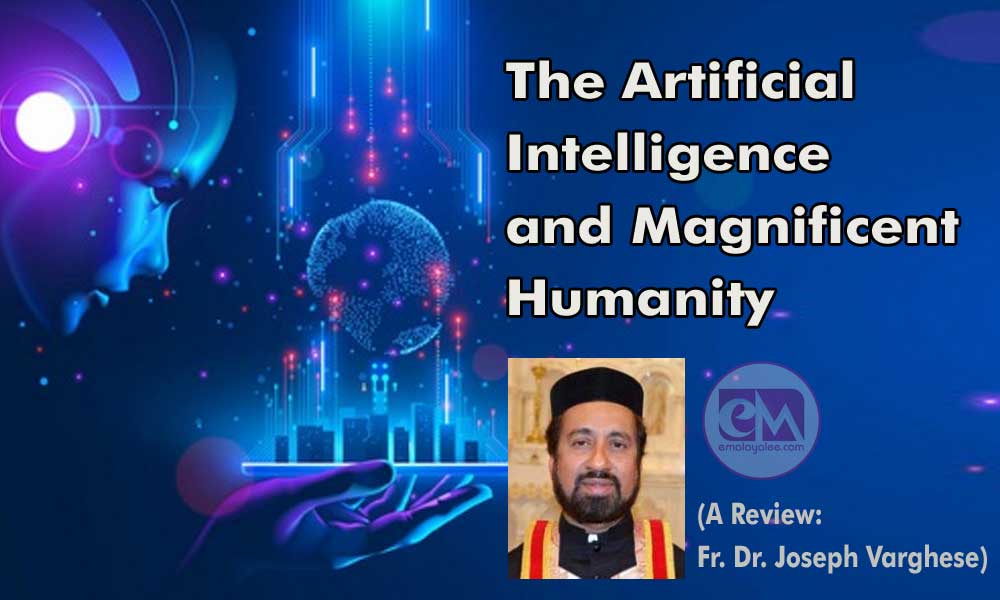
Magnifica Humanitas (Latin for "Magnificent Humanity") is Pope Leo XIV's first encyclical which released few days ago, it is a first such document focused entirely on safeguarding human dignity and the common good in the era of artificial intelligence and first of a kind from a Church.
Though the encyclical applies Catholic social teaching to the digital age, but it can be applied to whole universe with all religious backgrounds.
The main themes and arguments by this document which include:
Inherent Dignity over Algorithms: The Pope asserts that human beings, made in the image of God, can never be replaced by machines. Humans must be valued for their inherent dignity, not their productivity.
Critique of AI Risks: It warns against transhumanism, posthumanism, and a technocratic mindset that reduces people to data points. It specifically calls for artificial intelligence to be "disarmed" and taken out of unregulated races for weapons, mass surveillance, and corporate profit.
A Call for Responsible Progress: The document is not anti-technology. Instead, it asks that all AI development be guided by moral intelligence and subordinate to the flourishing of local communities, ordinary families, and the vulnerable.
The New "Rerum Novarum": The document marks the 135th anniversary of Pope Leo XIII's Rerum Novarum, which famously protected human labor during the Industrial Revolution. Magnifica Humanitas attempts to do the same for the digital revolution, ensuring algorithms serve humanity rather than the other way around.
Pope Leo argues that the so called artificial intelligences do not undergo experiences, do not possess a body, do not feel joy or pain, do not mature through relationships and do not know from within what love, work, friendship or responsibility mean," Pope writes. "Nor do they have a moral conscience, since they do not judge good and evil, grasp the ultimate meaning of situations, or bear responsibility for consequences. They may imitate language, behavior and analytical skills, or even simulate empathy and understanding, but they do not understand what they produce, for they lack the affective, relational and spiritual perspective through which human beings grow in wisdom."
“The artificial imitation of care or support can become particularly risky when it enters contexts where real relationships and emotional bonds are lacking. Here, the danger is not so much that a person may believe they are communicating with another person, but rather that they may gradually lose the very desire to form genuine human connections." Pope argues.
In a remarkable moment at the Vatican, Christopher Olah, co-founder of Anthropic — one of the world's most powerful artificial intelligence companies — stood beside Pope Leo XIV and publicly declared his gratitude to the Catholic Church. Speaking at the historic launch of Magnifica Humanitas, Pope Leo's first encyclical on AI and human dignity, Olah acknowledged what many in Silicon Valley will not: that Big Tech cannot police itself. Beset by commercial pressure, geopolitical rivalry, and human pride, the AI industry needs a moral voice from outside — and Olah found that voice in Rome. In an age when the Church is often dismissed by the technological elite, one of that elite's most respected figures travelled to the Vatican to say, plainly, that the world needs the Church. Pope Leo XIV, in turn, thanked Olah personally — a sign that the Catholic Church is not standing on the sidelines of the most consequential technological revolution in human history, but leading the conversation.
As a Christian, I wonder if the modern world has the ears to hear these concerns. The de facto stance of religion in the public square of modern, pluralistic societies is that of an ethical authority. Separated from their dogmatic roots, ethics inevitably in which anyone's opinion is as good as another's. When religion is reduced to just an advisory role on ethics it is incapable of generating the kind of humane culture without which we will all suffer from the heartless technologies and those companies who control them for profits. It is the time for awakening.
(Fr. Joseph Varghese. M.A; MTh; Ph.D.
Is the Adjunct Professor, Liturgical Studies. Holy Sophia Coptic Orthodox School of Theology.
Executive Director: Institute for Religious Freedom and Tolerance(IRFT), New York.
*Executive Council Member: Religions for Peace, USA.
*Co-Convenor: Inter-Religious Dialogues: National Council of Churches, USA.
*Member: U.S. Consultation of Oriental Orthodox - Catholic Churches' dialogue.
*Delegate: Standing Conference on Oriental Orthodox Churches (SCOOCH).
*Priest& Vicar: St. Mary’s Syrian Orthodox Church. South Florida.)
*Adjunct Professor, Liturgical Studies. Holy Sophia Coptic Orthodox School of Theology.
*Executive Director: Institute for Religious Freedom and Tolerance(IRFT), New York.
*Executive Council Member: Religions for Peace, USA.
*Co-Convenor: Inter-Religious Dialogues: National Council of Churches, USA.
*Member: U.S. Consultation of Oriental Orthodox - Catholic Churches' dialogue.
*Delegate: Standing Conference on Oriental Orthodox Churches (SCOOCH).
*Priest& Vicar: St. Mary’s Syrian Orthodox Church. South Florida.

EMalayalee Available in MediaAppUSA



Copyright © 2024 emalayalee.com - All Rights Reserved.
Webmastered by MIPL, Web Hosting Calicut Kerala