

Simpson Kalathara: A pioneer, who won the hearts through Indian food
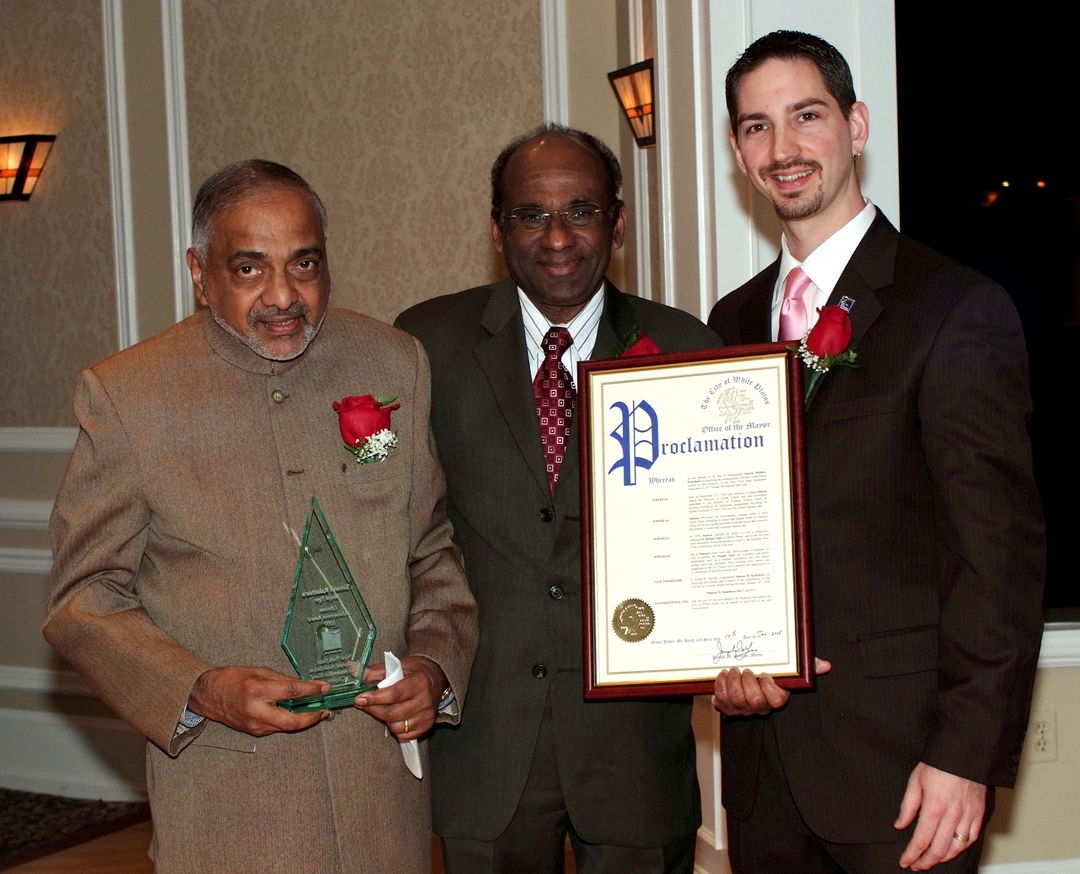
(Published in 2005 in India Abroad)
Simpson Kalathara still does not know why he chose to go to the cooking school, rather than selecting some other profession. The year was 1968 and opportunities were galore.
He came to the US as an employee of the external affairs department and was posted in the New York consulate. The job was not a very busy one at that time and after the office hours he made it a point to go to the cooking school.
After four years, in 1972, he left the job at the consulate and decided to try his luck in America. The first job he landed in was at the Hilton in Rye, about 40 miles from the New York City.
Those were the days when Indians were very few and Indian food was not available except in very few pockets. He yearned for Indian food and searches led him to the Bengal Tiger Restaurant in White Plains in nearby Westchester County.
When he reached the restaurant for lunch, he did not see the hustle and bustle of an eating place. Instead, one employee suddenly woke up from a nap seeing a customer.
Simpson had to wait for the food as the employee went out to buy groceries to prepare it.
The owners were Bengalis and they chose the beautiful Royal Bengal Tiger seen only in Bengal as the name of the restaurant. They started it in 1972 but it was not doing well at all.
Seeing an Indian as customer, they suggested he takeover the restaurant. "It was a really funny experience. I never even took the idea seriously," Simpson laughs.
He visited the restaurant again several times and the persuasion to buy it continued. Finally, Simpson also felt a calling to become a hotel owner. Thus he purchased the one room restaurant which had a capacity of 50 seats in July 1975.
Thirty years later Simpson looks back and feel happy that he bought the restaurant. It has grown into one of the best restaurants in New York. In 1996, the New York Times gave it 'excellent' rating, which was a very rare honor. It is listed always in the Zagat Survey. It is
one of the places where people queue up for lunch and dinner, through the price is that of an upscale restaurant.
Simpson is one of the very few Indians who own the same restaurant for three decades and going strong. It is also a success story of an Indian fulfilling his American dream on the restaurant business.
Currently it has 120 seats and a full bar. It hosts celebrities as well as those who love Indian food in the area. Occasionally Chelsea Clinton will come through the back door to take out the food rather than eat it there. Clinton residence in Chappaqua is only about ten
miles from White Plains.
The price also went up. For a buffet lunch it was only two dollars then, which is fifteen now.
Simpson's customers are mainstream Americans. "Initially the officials of the IBM and Texaco were the patrons. The headquarters of the companies were near
the hotel" he notes. Gradually the people of Westchester chose it as their favorite pace for Indian food.
He feels the Indian customers are a problem. "They will ask for this and that. Then they will complain that it is not the food they get in India. The price is also not affordable for many."
He entered the business when the Americans still called the Indianfood as 'curry.' Initially people were afraid to walk through the road near restaurant thinking that the hot spices from there will hurt them.
"The beginning was not easy. We had to establish a name and make a difference from the previous ownership,' Simpson notes. But in 1976, he got a break when the Westchester Magazine wrote an article praising the quality of the food. In1978, New York Times also wrote an appreciative piece. The status of Bengal Tiger grew with them. "An article criticizing the restaurant could doom the business," Simpson notes.
For all the success of the restaurant, the reason he cites is quality. "There is no compromise in keeping the quality. If we serve food cooked earlier after heating it again, we are doomed. So food made for lunch cannot be served for the dinner," he has no doubt about that.
He cites another example. To thicken the gravy for some dishes, people use the chickpeas powder. But the Mughlai cuisine which is mostly served in the restaurant does not allow that. The cuisine allows the use of almond only. "One box of almond costs $300. We buy about 12 boxes a week. How many people can do that,' he asks.
In keeping the quality, he has another mission too. "When we give bad food we are bringing a bad name to our motherland also. The saying that all Indians outside of the country are India's ambassadors should be in our heart always."
The biggest problem for the restaurant business is the difficulty to get qualified cooks and other workers. "Nowadays it will take up to six years to bring somebody from India."
Most of the ten people in his kitchen are working there for more than a quarter century. This is considered a very rare thing. In most places employees will not work for longer period. The reason: the highhanded and inhuman behavior of the boss! When an Indian becomes rich he will start to treat fellow Indians as slaves. This is most evident in the hotel industry.
Occasionally, Simpson will also cook. "Those who do not know about cooking and food should not enter into this business,' Simpson advises. The customer will be in different moods each day and will order different foods. One should know which wine will go with each food. Simpson goes to Bordeaux in France every two years to participate in the wine tasting there to know more about wines.
Tandoori is also a hit at Bengal Tiger. But south Indian food is not a best seller, he says. Masala dosa is the only fast moving item. He says the Chettinad cuisine is out of date.
Though very successful, Bengal Tiger has no branches. He says he has no greed to grab more and more. "The owner should look at each aspect of the food. If there are many restaurants he will not be able to attend to these details. Naturally it will end up in disaster,' he notes.
He has a few tips for the newcomers. First one is that the customer knows things well. The Americans read and research about an item before they order it. It is not wise to cheat him. He will not come back.
Another thing is that restaurant people should speak English. If one knows only Hindi, how can the Americans interact with him?
The cleanliness, and ambience are also very important. Simpson is very familiar in the social and political life of Westchester. "It is important that we become part of the mainstream community. We have to bend a little to adjust to be part of the
mainstream,' he notes.
He is always innovative too. The menu is frequently changed and innovative items are added. Simpson and the cooks will experiment with new food. They will first serve it for the buffet to know the response of the people. If it moves fast then it will appear in the menu.
"Food should change. Otherwise, one cannot succeed in this field. The food served thirty years ago has no significance now."
He is currently making an appetizer with crab and rice powder called 'crab puttu' (puttu is a Kerala food. It is made of rice floor steamed in a special vessel with coconut.)
Other new items are chemmeen dosa (dosa with shrimp) Chemmeen Oothappam, Chempil Arayans fish curry etc. He says the cost of a buffet lunch that he sells for $15 is more than the price. The hotel industry is labor intensive. Only the Chinese can sell food cheap because many of their food items come from China in barrels.
Simpson spent $15,000 to study the amount of calories in each dish he sells. It was conducted by dieticians and experts which took almost two years to finish it.
"New York is considered the melting pot. But we have to melt a little to become part of it," e said.
He says the ingredients of the food of all people are almost the same. Only the reparations are different.
"To get the desirable taste all ingredients should be blended in the correct measure. It is like composing music."
He says the best food is the Indian food. There is no parochial feeling here!
Also, the food should be served carefully. It should not be more or less. If too much food is given people will think it is cheap and will waste it.'
Simpson says he has not faced any discrimination so far in this business. But he has faced several crisis and was able to survive them.
He travels to London, Singapore and other major cities to learn about new food. He says he has no regrets for being a restaurateur. The only problem is that he will not get time to socialize on Saturdays and Sundays.
For each food a special cook is assigned. Nobody else touches his work. His three children, Mathew, John and Mary, have recently started a take out in front of the Bengal Tiger named 'Ambadi.' It sells Indian food cheap and it is also a success.
They are doing it before going for higher studies. His wife, Rosamma, a registered nurse, operates an Indian grocery store.
Simpson is also a partner in the Malabar Hotel in London.
He says his only wish is that he should not get a bad name in this business.

EMalayalee Available in MediaAppUSA



Copyright © 2024 emalayalee.com - All Rights Reserved.
Webmastered by MIPL, Web Hosting Calicut Kerala