

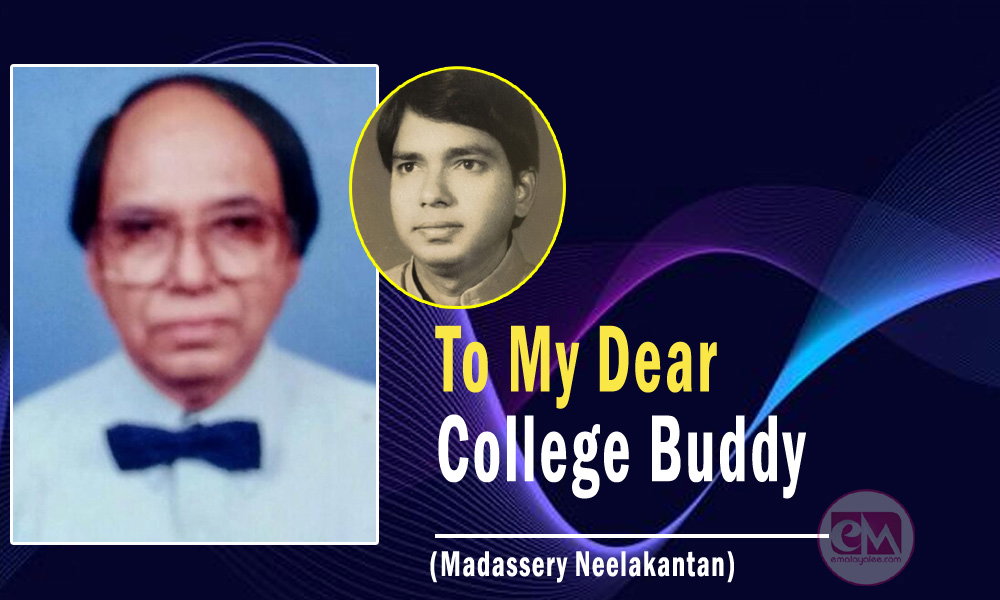
To My Dear College Buddy (Madassery Neelakantan)
Dear Krishnan, my friend!
I can’t believe that you have been gone more than three years now. I didn’t save the last messages between us, and I don’t have a copy of that sad message from your wife Sarala telling me that you are no more. A week before that, she had written that you were waiting for me to visit you in Mumbai and start writing your life’s story. Such trust you had placed in me and in our friendship and I didn’t deserve it, obviously!
I still remember the first time I met you, of course. We were in the first year of the three-year Honours course in Maharajas College, Ernakulam – you in Econ and me in Chem. It was August 1954. I was living in the Annex hostel on TD Road. Your classmate (and my new friend) Raman and I were talking one evening in the yard when you came. Raman introduced me and said that I had scored high marks from Prof TCB for writing a short essay for the English class, about Winston Churchill. I had some good words to say about Sir Winston. We went on the first of our countless evening walks. You unleashed a torrent of ridicule at me, for not really knowing who Winston was and how unfriendly he was towards us all. I was overwhelmed. I had a big ego, and it was a bit bruised!
But those evening walks made us great friends. We walked almost daily, for an hour or two, usually stopping at the India Coffee House, and sometimes browsing a bit at Basheer’s books stall and talking about books. I didn’t have a lot of time to read those days anything but chemistry, but there were some occasional books. I read fiction mostly and talked to Raman about what I read. You, my friend, disapproved my habit of spending time on Hardy, Maugham and such other writers. You, of course, were reading Dostoevsky and James Joyce and urging me and waiting for me to read Ulysses. (Krishnan, over several years, you used to check my progress in this, but, my friend, I have to admit that I haven’t yet read that celebrated work!) But I must mention one amusing thing here – to show that you weren’t that straightforward. As I said, you scorned my reading of Hardy, but I was very surprised when, in the last year of your life, you quoted from memory the last lines of Hardy’s Tess in one of your messages. I guess you were indirectly saying sorry for making fun of me for reading all that stuff in my youth.
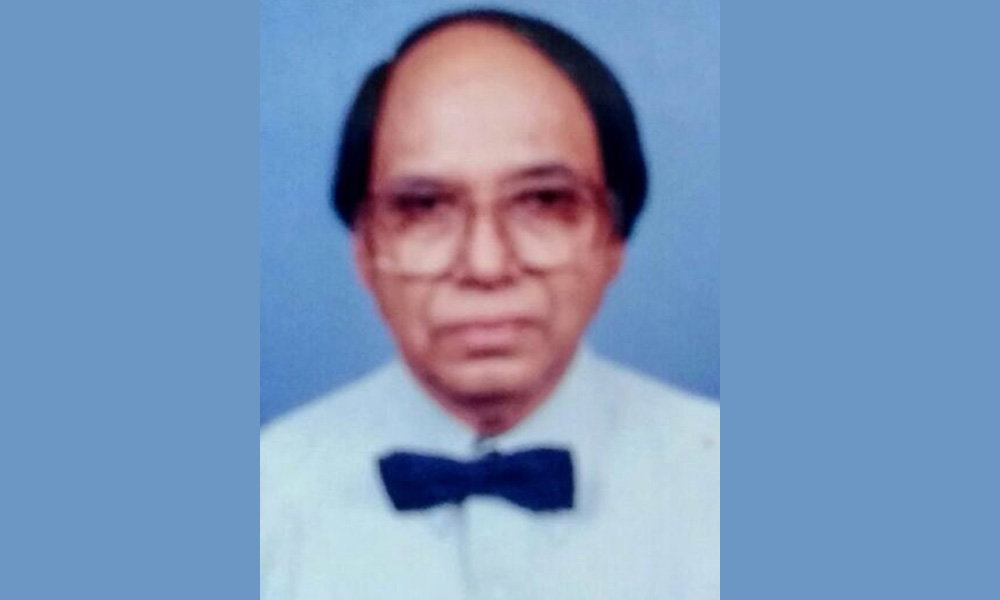
Krishnan Nair
You of course were reading philosophy. Among many authors, Russell was high on your list. But there were many others. There was, of course, the Austrian – Ludwig Wittgenstein. I am not sure anyone else at the college or in the area had even heard of Wittgenstein and his Tractacus Logico-philosophicus at that time. Our college started a philosophy department only a decade later. (You said in a 2017 message, I hasten to add, that you got Russell’s ‘Portraits from Memory’ from my poor bookshelf in the hostel, and Wittgenstein was mentioned there a few times! I have no memory of that book from then, but I checked recently, and my friend, Wittgenstein was, indeed mentioned four times in that book!! But I swear, I have no recollection of having read anything about or by him at that time). You tried to explain his ideas on the limits of language to poor Raman and me, but we didn’t learn much. I learnt that the said W, who had died just a while before then, was a dear student and sometime fierce critic of your hero Russell and that probably was what made him important for you begin with. You, meanwhile, wanted me too to read more philosophy and as a start, got me Will Durant’s Story of Philosophy. I think I read up to the third chapter, on Spinoza, and stopped. When you made fun of me, I countered that Spinoza was, after all, a favourite of Einstein’s. I recall also that you persuaded me to subscribe to the magazine Encounter edited by Melvin Lasky and Stephen Spender. I read only a few pages here and there and the magazine mostly collected dust. Too intellectual for me, it was!
I fondly remember that often when we returned from our walks to the vicinity of the college, Radio Ceylon’s weekly Binacca Geetamala would be flowing out of loud speakers in Irwin Park nearby.
You encouraged me throughout those days. You came to the Chemistry Dept seminar I gave on the inner workings of stars (based on Gamow’s book The Birth and Death of the Sun.) I was greatly surprised when I read one of your messages to me in the last year of your life, saying that you had attended that seminar (which I remember, as I said), and that I had copied passages from Prof Sankara Kurup’s great poem Nakshatra Geetham (Song of the Stars) (‘Enchithayilthanneyanu njan, ennaletho punchiritthilakkatheppathikan darsikkunnu!’ etc. – ‘I am verily on my funeral pyre, but what the passer by sees is the sparkle of a smile!’) on the blackboard. You thought also that I had written on the blackboard something about Cleopatra’s nose (which could launch a thousand ships!), but I don’t think I had and I can’t think of any connection between her royal nose and the inner workings of the stars. I think your memory failed you there! I was awarded a book as a prize for that seminar. I let you pick the book for me. I only vaguely remember now, but I think it was a book about understanding human nature, and I must say that I didn’t profit from it because I didn’t make the effort to read it carefully.
Talking about Prof Kurup, you made fun of me for my shyness that prevented me from even offering a word of respect to the great man who was retiring that year from his professorship, whose poems I devoured and whose house I had, in fact, visited a few times with a student who was related to him.
(Going back to my seminar: I did not want to belittle your ability to remember details from so long ago, so I asked the all-knowing, AI-empowered Google about the possible relevance of the queen’s nose in a discussion of the nuclear processes inside our sun. Here is what I got:
Mentioning Cleopatra's nose would be a poetic metaphor for the butterfly effect—how tiny, seemingly insignificant variables can drastically alter massive, long-term outcomes. In a seminar on stellar nuclear reactions, it highlights how astronomically sensitive the universe is to fundamental physical constants.
The concept originates from the 17th-century French philosopher Blaise Pascal, who famously wrote: "Cleopatra's nose, had it been shorter, the whole face of the earth would have been changed." He theorized that a smaller nose might have made her less attractive to Julius Caesar and Mark Antony, entirely altering the Roman Empire and Western civilization.
In astrophysics, this mirrors the concept of sensitive dependence on initial conditions. For example, if the strong nuclear force or the initial ratio of matter to antimatter had been altered by even a fraction of a percent during the Big Bang, stars like our Sun could not exist, and the universe would look entirely different. Drawing Cleopatra's nose was a highly creative, if slightly eccentric, way to illustrate how profound changes stem from microscopic detail.)
My friend, I was not knowledgeable enough to think up something creative like that! So, let us agree that there was no nasal embellishment on the blackboard!
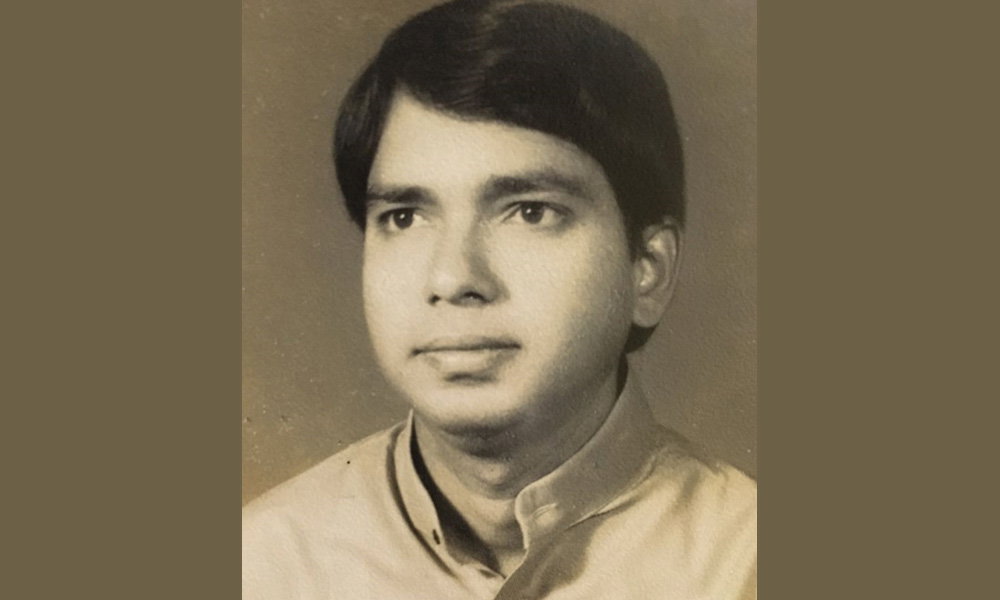
Krishnan Nair as a young man
Your attitude to exams was casual, and I remember the time you spent the entire three hours in an exam answering one question (in stead of the expected four) and got twenty-four total marks out of hundred. I was sorry when you and Raman didn’t get the teaching jobs you desired and both of you ended up in Bangalore, working in the accountant general’s office. I was consoled by the fact your favourite teacher at Maharajas, P G N Namboothiri, also came to Bangalore as Deputy Accountant General in whose office you ended up working. ( I got to know him better later in life, a few years before his life ended). I went from Maharajas to the Bhabha Atomic Centre in Bombay, starting a career in nuclear science. I had the pleasure of visiting you often on my way back to Bombay from my annual vacations in Kerala.
But your life took an exciting turn that I learned about only when you came to Bombay in 1967 and stayed with us for a few days in Kenilworth, the apartment building we were living in. You recounted your encounter with the ‘Colonel’ and how you came into his fold. I don’t recall the details of what happened, but this is what I remember from what you told me then. You had gone to hear this retired army colonel talk about the India-China War of 1962. As an admirer of V K Krishna Menon, the Indian defence minister during that period, you had keenly followed and thought about the details of the military conflict. You stood up and asked the Colonel some penetrating questions. After the talk, the military man took you aside to chat. You talked about the War, and about your own life in Bangalore. You two met a few more times, and in the end, the colonel offered to lift you out of the less than exciting clerical job in Bangalore and take you to Bombay where he owned or controlled a company. That is how you came to Bombay, a little before I quit my job and travelled to the US seeking a better future. The very last time I saw you was at the end of 1967 – we ran into to each other in Flora Fountain in Bombay. I told you that I had quit my dream job at the Bhabha Atomic Centre to become a lowly grad student at Stonybrook University in the US and you showed surprise at my courage and applauded me! We had coffee and chocolate cake, I remember, and said goodbye.
It was some forty-eight years later that we got in touch again! I am always blaming myself for not trying to renew our contacts all through those years. Anyway, we finally got in touch again through some unlikely intermediaries and you filled me in on all that was happening in your life. You had gone to law school, got a job in the company where the colonel was an important man. You got married to Sarala. Your daughter Smriti was married to Prasad Gangadharan, and you had two grandchildren. They lived in Pune, if I have it right. I was happy for you, and I was beginning to get used to the long streams of Whatsapp messages about the stuff you were reading in your old age - politics, philosophy, lot of Russell and odds and ends and about the videos you were watching - until one day you informed me about the terrible accident that left you handicapped for the rest of your days! (Being hit by an automobile is terrible and being hit while standing in front of the small coffee shop in your own native village in Kerala, where you had gone to spend a few days, was utterly unthinkable). You went back to Bombay, your wounds healed but you needed a wheelchair and much help in general. I made an on the spur video call to you late one evening your time, and you got up scared and screaming, and ended the call. Never called you after that. That was a few days after your wife had said you were expecting me.
Sometime before that, you had received a copy of my second book of poems, and I was pleased that you liked what you read there. I was pleased that you thought my rendition of Einstein’s concept of God (in my poem Einstein’s God) was accurate.
I am sorry I didn’t back up all of your messages when I changed my phone – with the result that the last ones I have saved are from Feb 2018, about a book of useless information that you were reading.
And I don’t have a copy of the message your dear wife sent me about your wanting me to write about your life. And I don’t have that sad final message telling me that you are no more.
It was a rare blessing to have known you as my friend, Krishnan, and in my nineties, beset with concerns over my dear wife’s dementia, I return often to the memories of the lovely days we had together in our younger days!
Your friend
MN

EMalayalee Available in MediaAppUSA



Copyright © 2024 emalayalee.com - All Rights Reserved.
Webmastered by MIPL, Web Hosting Calicut Kerala